

Stories rooted in real life
Every adventure in the Tom Tom Book Series begins with lived experience. Created by counsellor Tomass James Wood in Portsmouth, these stories bring genuine childhood memories, neurodiversity, and practical therapeutic insights together to help young people and families navigate life with confidence and compassion.
Stories Rooted in Real Life
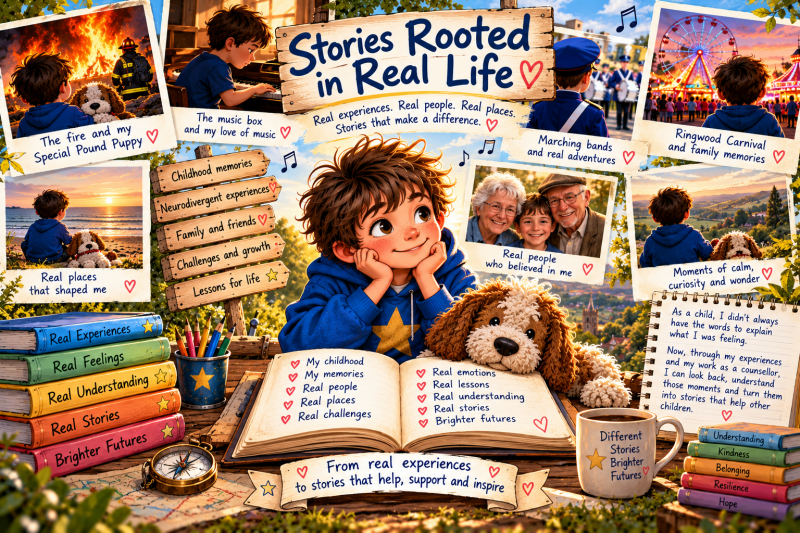
The Tom Tom Universe is rooted in real life. Many of the stories began not as fictional ideas, but as memories from my own childhood — real people, real places, real mistakes, real adventures and real emotions.
Even Tom Tom himself comes from that childhood. My grandparents called me “Tom Tom,” and the character represents the curious, neurodivergent little boy I once was.
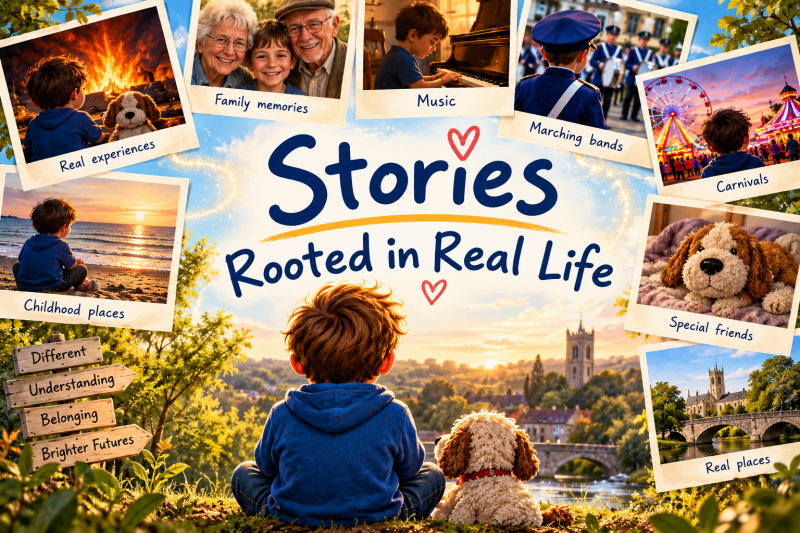
The fire and my Special Pound Puppy were real. My love of music was real. The music box, piano, marching bands and Ringwood Carnival came from genuine experiences. Nanny Elcy, Pops, Nanny Jax and many of the people surrounding Tom Tom were inspired by people who played important roles in my life.
As an adult, I can return to those memories with a different understanding. My experiences of autism, ADHD and anxiety, together with my work as a counsellor and psychotherapist, allow me to recognise things that I couldn't necessarily explain as a child.
That is where the stories become more than memories.
A childhood mistake can become a story about responsibility and forgiveness. A treasured toy can demonstrate comfort and attachment. Music can become a Bridge. A frightening experience can help children explore Waves and emotional regulation. Family memories can become stories about belonging, connection and love.
I don't use private client experiences as stories. The stories themselves come from my life and imagination, while my counselling experience helps me understand the emotions and behaviour underneath them.
That is what makes Tom Tom personal.
These aren't stories written around a lesson and then given a character.
The experience came first. The understanding came later. The story grew from both.
By sharing them, I hope another child can recognise something of themselves and another adult might look beyond a child's behaviour and wonder what story lies underneath it.
Real experiences. Real feelings. Stories created to build brighter futures.
Growing Up Neurodivergent
Growing up neurodivergent can mean experiencing the same childhood as everyone around you, but experiencing it in a completely different way.
For me, childhood was filled with curiosity, music, movement, imagination, routines, strong attachments and endless questions. I could become completely absorbed in the things that interested me, while other situations could feel confusing, uncomfortable or overwhelming.
I now understand much more about those experiences through the lens of autism and ADHD.
As a child, however, you don't necessarily have that language.
You don't say, “I'm experiencing sensory overload,” or “I need predictability because this unexpected change is making me anxious.”
You simply know that something feels wrong.
Sometimes you move. Sometimes you become silly. Sometimes you withdraw. Sometimes you ask the same question repeatedly. Sometimes emotions become enormous. And sometimes adults only see the behaviour, rather than what is happening underneath it.
That experience became an important foundation of the Tom Tom Universe.
Tom Tom is based on the little boy I was. Through him, I can look back at childhood with the understanding I have gained as an adult, a neurodivergent person and a counsellor.
That is why Tom Tom has his Brian's, Waves, Circles and Bridges.
His Brian's help explain the different thoughts competing inside his head. His Waves give language to emotions and overwhelm. His Circles represent routine, familiarity and safety. His Bridges are the people, interests and activities that help him connect with the world.
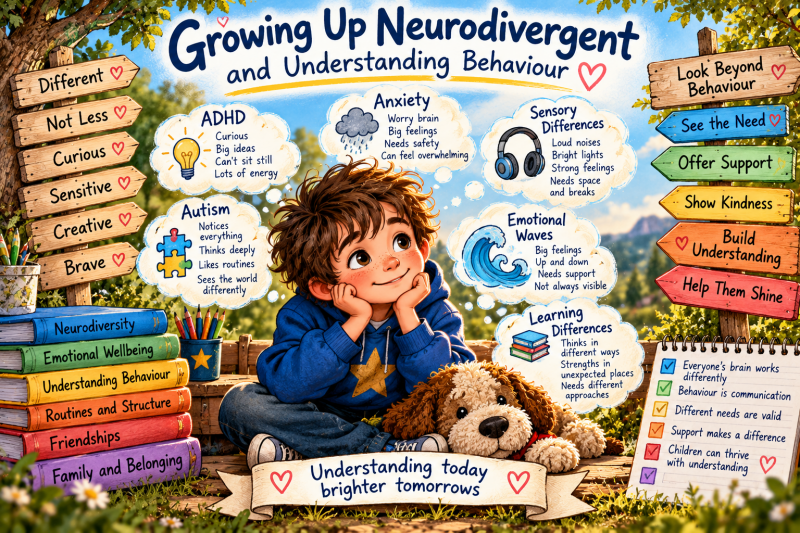
Growing up neurodivergent taught me that different behaviour often has a reason.
The child who cannot sit still may still be listening.
The child who avoids something may actually be anxious.
The child asking endless questions may be trying to create certainty.
The child intensely attached to an object may be finding comfort and safety through it.
And the child who learns differently is not necessarily less capable — they may simply need a different pathway.
That is one of the most important messages behind my work today:
Don't just look at what a child is doing. Become curious about why they might be doing it.
Understanding can turn judgement into compassion, behaviour into communication and difference into something a child can learn to understand rather than something they are taught to hide.
Different brains. Different pathways. Equal opportunities.
"Being different does not mean being less. When we look beyond outward behaviour with curiosity and kindness, we help children feel truly seen and understood."
Tomass J Wood, Counsellor and Author