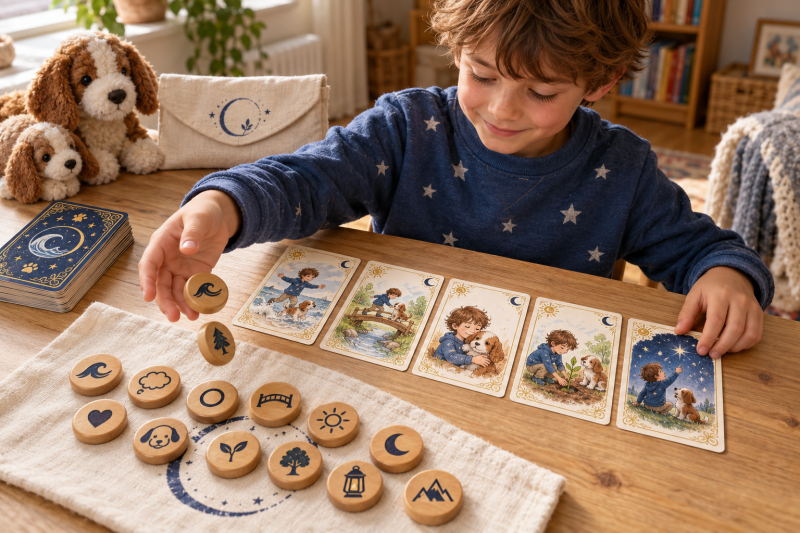
Tom Tom's Reflection cards and Circle Runes
Tom Tom Reflection Cards & Circle Runes are gentle storytelling and emotional-development tools designed to help children explore thoughts, feelings, behaviour and needs. Using simple illustrated symbols, children can choose cards or runes and create their own story, giving them another way to communicate when words are difficult. Rooted in the Tom Tom Universe, they encourage emotional regulation, self-understanding, creativity and connection — especially for neurodivergent children.
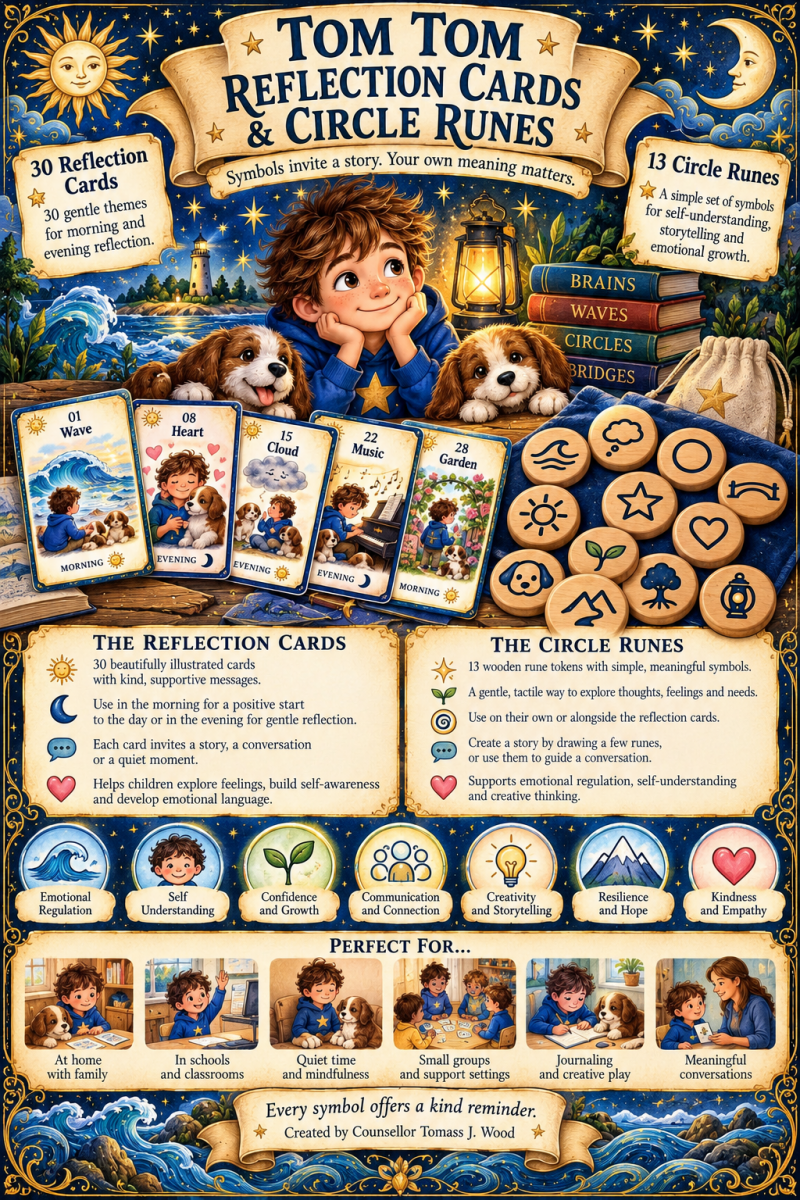
Tom Tom Reflection Cards
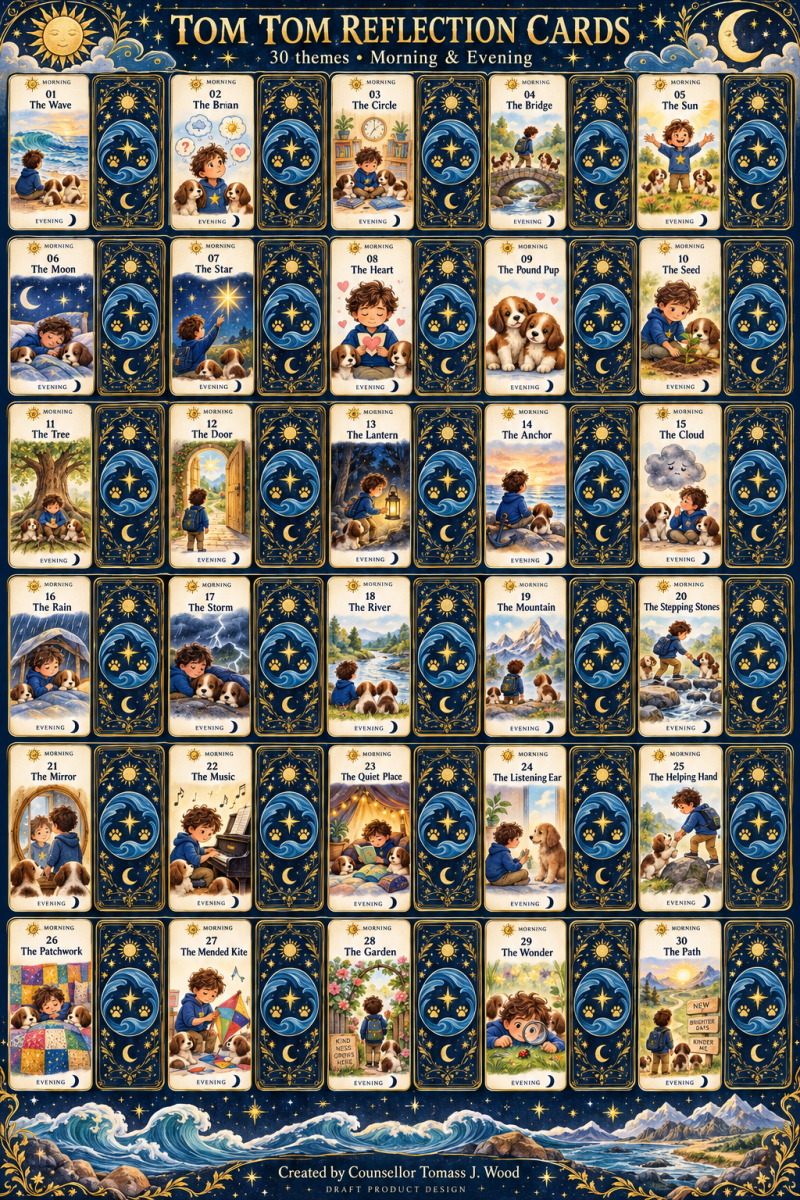
The 30 Tom Tom Reflection Cards help children explore emotions, thoughts, behaviour and needs through pictures, symbols and storytelling. A child can choose five cards to create their own reflection story: Where I am, What I notice, What can help, My small step, and What I carry. With different combinations each time, the cards open new conversations and give children a gentle way to express things they may struggle to put into words. They are designed especially with neurodivergent children in mind, supporting emotional language, self-understanding, regulation, confidence and communication.
Tom Tom Circle Runes
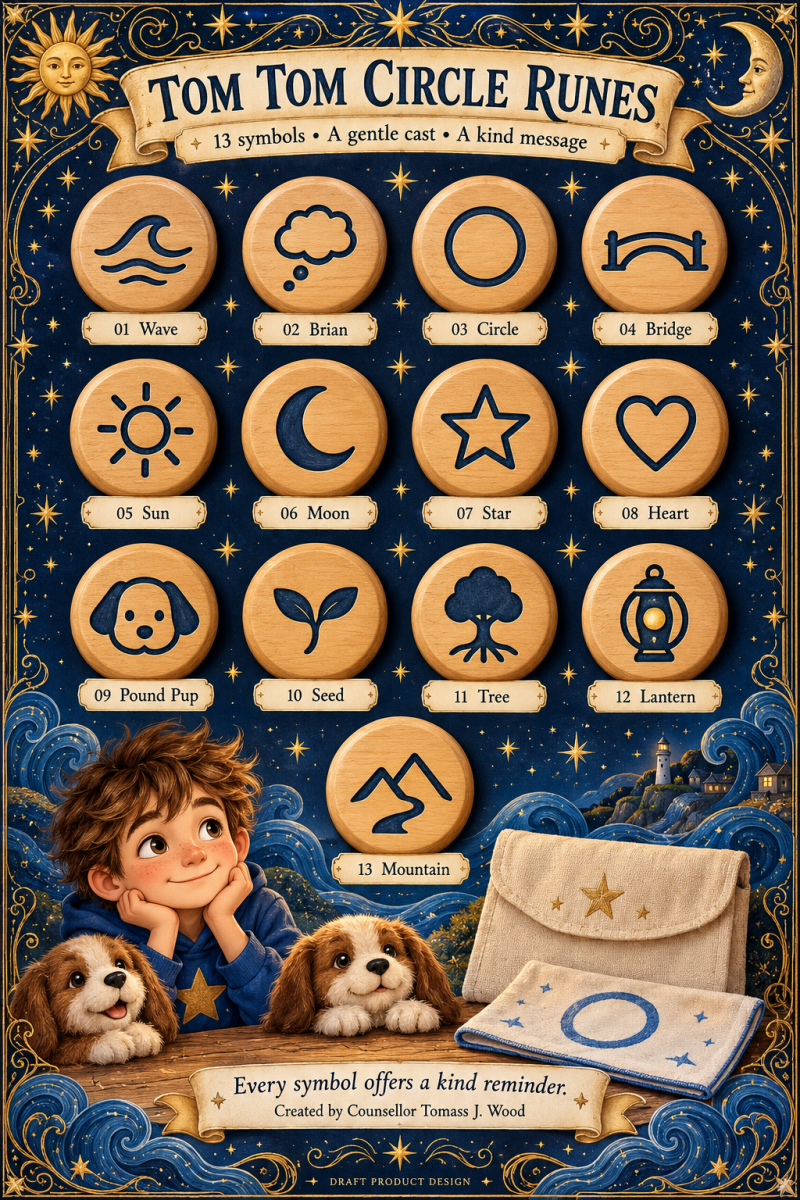
The 13 Tom Tom Circle Runes are tactile wooden symbols designed to help children explore feelings, thoughts, needs and experiences through play and storytelling. Each rune carries a simple symbol — such as the Wave, Brain, Circle, Bridge, Heart, Pound Pup, Lantern or Mountain — with its own gentle meaning. Children can choose or cast several runes and use the symbols together to create a story about what is happening inside them. They are not fortune-telling runes; they are communication and reflection tools, giving children another way to say “this is how I feel” when finding the words is difficult.
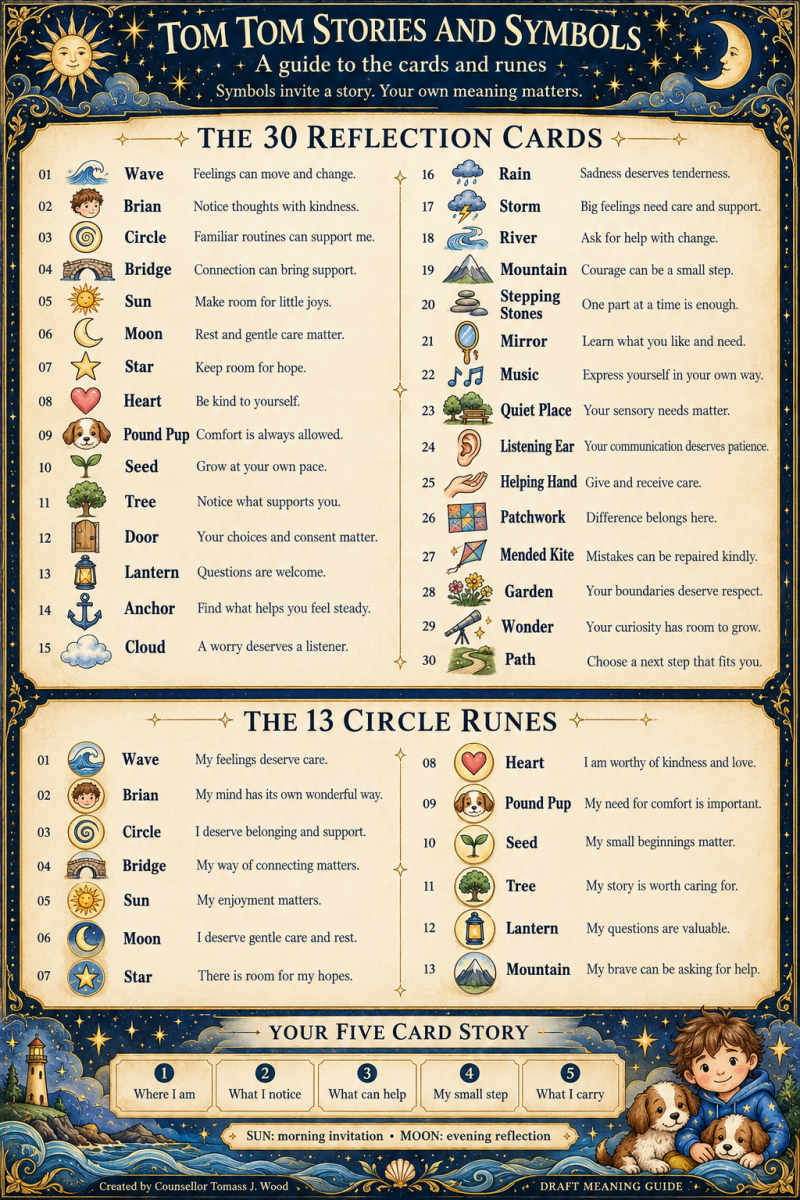
How the Reflection Cards & Circle Runes Work Together
The Tom Tom Reflection Cards and Circle Runes can be used independently or brought together to create a deeper emotional storytelling experience. There are no right or wrong answers. A child chooses the cards or runes that feel meaningful to them and uses the pictures and symbols as prompts to explore what they are thinking, what they are feeling, what might be affecting their behaviour, what they need and what could help next.
Used independently, the Reflection Cards provide colourful visual prompts for conversation and storytelling, while the Circle Runes offer a more tactile experience — something a child can hold, arrange, move and explore. Used together, a rune can identify an important feeling, need or theme and the cards can help the child develop that idea into a fuller story.
This can be particularly valuable for neurodivergent children, including children who find direct questions, abstract emotional language or face-to-face conversations difficult. Instead of repeatedly asking “What's wrong?”, an adult can give the child another route into communication.
The aim isn't to interpret a child's choices for them. It is to become curious about what those choices mean to that child. A Wave might mean excitement to one child and overwhelm to another.
Through play, symbols and storytelling, the resources are designed to support emotional vocabulary, self-awareness, communication, regulation, creativity and connection. Most importantly, they can help turn behaviour into a conversation — giving a child a safer, gentler way to express: “This is what is happening in my world.”
The Tom Tom Reflection Cards & Circle Runes
The Tom Tom Reflection Cards and Circle Runes are two different but connected emotional communication systems within the Tom Tom Universe. They use carefully chosen symbols, pictures and storytelling to help children turn thoughts, emotions, behaviours and needs into something they can see, touch, arrange and talk about.
The Reflection Cards are a set of 30 illustrated cards. Each card represents an idea that a child may recognise within themselves or their world — such as a Wave, Brain, Circle, Bridge, Storm, Heart, Helping Hand, Quiet Place or Pound Pup. Rather than simply labelling emotions as happy, sad or angry, the cards encourage children to explore the bigger story behind what they are experiencing. Children can choose cards deliberately, draw them at random or arrange several together to create a reflection story. The images provide the starting point; the child's own interpretation gives the card its meaning.
The Circle Runes are a set of 13 tactile wooden pieces, each engraved with a simple Tom Tom symbol. They include the Wave, Brain, Circle, Bridge, Sun, Moon, Star, Heart, Pound Pup, Seed, Tree, Lantern and Mountain. They can be held, selected, placed into patterns or gently cast before being arranged into a sequence. Their physical nature provides a different experience from the cards, making them particularly suited to children who enjoy tactile, sensory or hands-on ways of engaging. They are reflection and storytelling tools, not fortune-telling devices.
The two systems deliberately overlap. The runes simplify an experience into powerful core symbols, while the cards provide a wider visual vocabulary for exploring the story around it. A child might select the Mountain rune because something feels difficult, the Wave because their emotions feel intense and the Lantern because they are looking for help. They could then use Reflection Cards to explore what happened, what they noticed, what they need and what might help them move forward.
Neither system tells a child what they are feeling. That is fundamental to their design. The adult listens rather than interprets. If a child chooses a Wave, the adult might ask, “What does your Wave mean today?” rather than deciding that the Wave means anxiety.
For neurodivergent children especially, this creates an alternative to relying entirely on spoken emotional language. A child who cannot immediately answer “How are you feeling?” may still be able to point to a picture, hold a symbol or construct a story.
The ultimate purpose of both resources is simple: to give children another language when spoken words are difficult — and to help the adults around them listen to what their behaviour, choices and stories may be trying to communicate.