Things to Do at Home with Curious Brian
Inclusive ideas for playing, exploring and learning together....
Follow Tom Tom’s Curious Brian
Curious Brian loves asking questions and finding out how things work. Why can a folded paper bridge hold some objects but not others? Where does a shadow go when the light moves? What can we discover by watching an ice cube melt?
This page is full of simple ideas for home play and learning, inspired by Tom Tom’s Curious Brian. Using everyday things you may already have at home, you can explore science, nature, creativity and the questions that catch your child’s attention.
There’s no single right way to join in. Your child might try an activity, watch you, ask questions, draw what they notice or return to it another day. Follow their interests, take things at your own pace and let curiosity lead.
How to Use These Activities
Choose an idea that interests your child and explore it together at a pace that feels comfortable. You could:
- Let your child choose what to investigate.
- Ask, “What do you think might happen?”
- Try it together and notice what changes.
- Draw, write, take a photograph or talk about what you discover.
- Try the activity another way, repeat it later or stop whenever it feels like enough.
Children can join in by doing, watching, listening, asking questions or sharing ideas. There’s no need to find a “right” answer. The aim is to enjoy wondering, noticing and learning together.
Curious Brian’s Home Experiments
Ready to explore? Choose an experiment below and see where your questions take you.
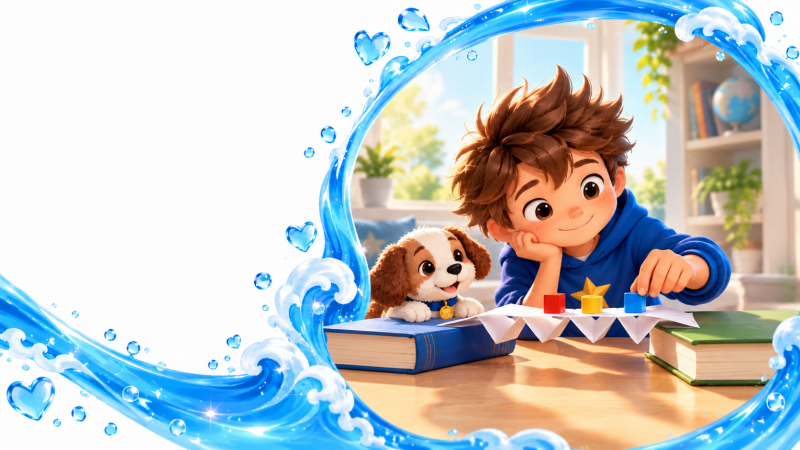
1. Can you build a paper bridge?
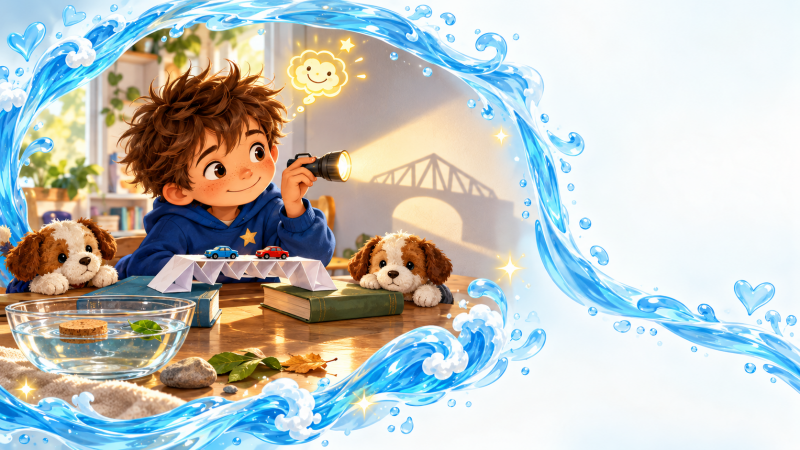
You’ll need: paper, two books and a few small, safe objects to test. Place the books a short distance apart and lay a flat piece of paper across them. Add one object at a time and see what happens. Now fold the paper like a fan or concertina and try again. Curious Brian wonders: What changed? Which shape held the most? Make it accessible: Your child can be the builder, the observer, the person who chooses the objects or the one who records what happens.
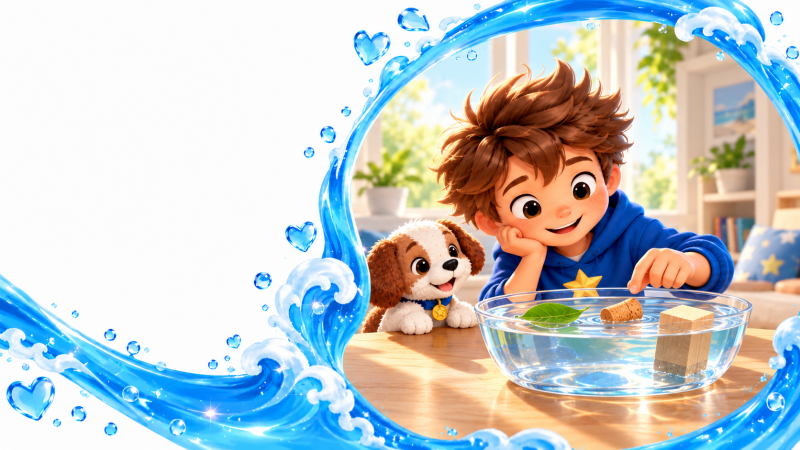
2. What will float or sink?
You’ll need: a bowl or washing-up bowl of water and a few clean, waterproof household objects. Before placing each object in the water, guess whether it will float or sink. Then test your ideas together. Curious Brian wonders: Were you surprised by anything? Can you find two objects that look similar but behave differently? Make it accessible: Skip the water if it feels uncomfortable. You could sort objects into “I think it will float” and “I think it will sink” groups instead.
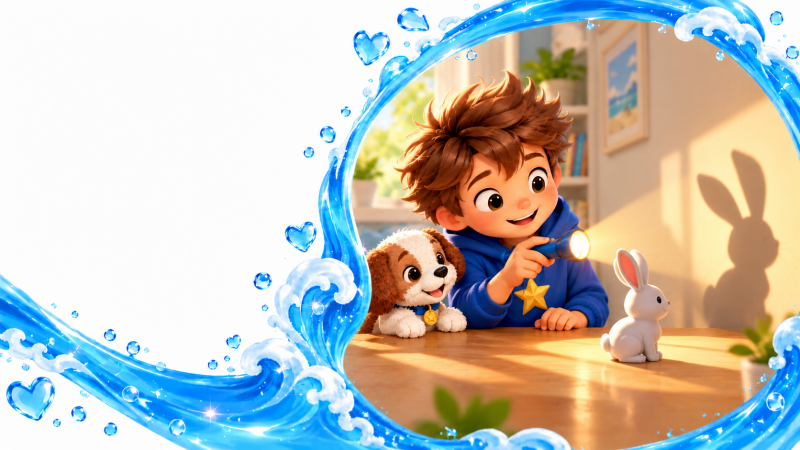
3. Follow a shadow
You’ll need: a torch and a few objects, or a sunny spot and some outdoor toys. Shine a torch towards an object and look at its shadow on a wall. Move the torch closer or further away. You can also move the object and watch what happens. Curious Brian wonders: How does the shadow change when the light moves? Make it accessible: Offer a quiet, dim space if that feels comfortable, and let your child watch rather than hold the torch.
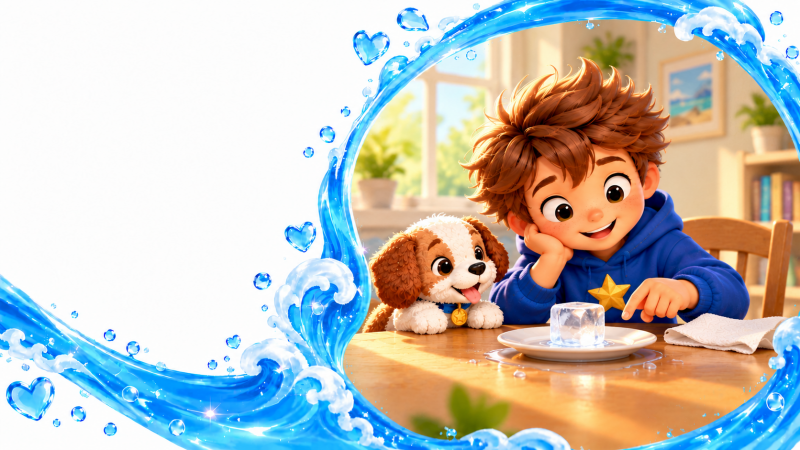
4. Watch ice melt
You’ll need: an ice cube, a plate and a timer if you want one. Place the ice cube on a plate and notice what happens over time. You could compare an ice cube in a warm room with one in a cooler place, with adult help. Curious Brian wonders: What do you notice first? Where does the water come from? Make it accessible: Your child can watch from a comfortable distance or use a spoon to move the ice. Dry hands afterwards if they dislike being wet.
5. Listen for vibrations
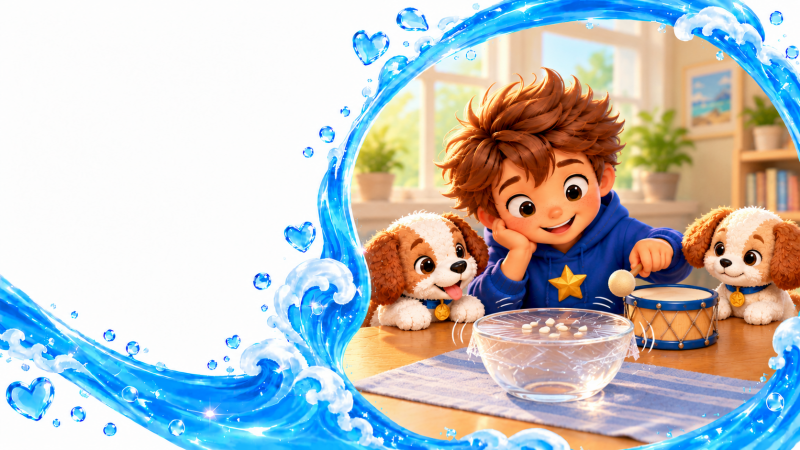
You’ll need: a bowl and a little cling film or a balloon, plus a few grains of rice. With an adult’s help, stretch the cling film or balloon material across the bowl and place a few grains of rice on top. Make a gentle sound nearby—such as speaking or humming—and watch for movement. Curious Brian wonders: Can you see the rice move? What happens when the sound changes? Make it accessible: Sounds can feel intense. Keep the volume low, give your child control over when to start and stop, or explore the setup silently.
6. Start a Tiny Nature Watch
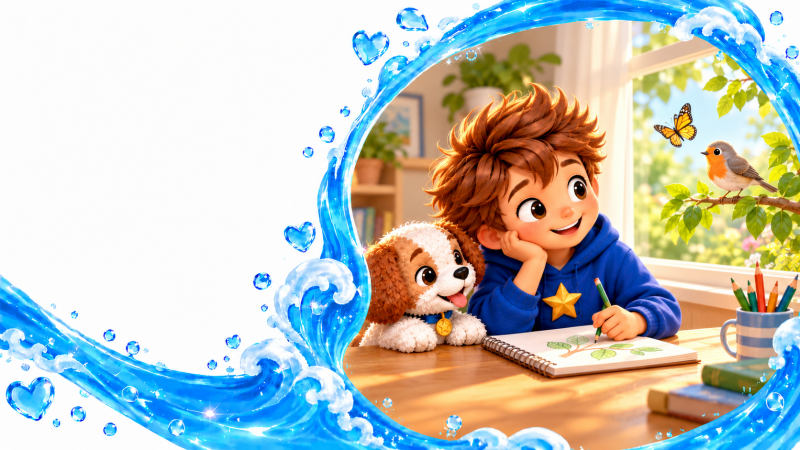
You’ll need: A window, garden or outdoor space. Paper or a camera is optional. Choose one small thing to observe: a plant, cloud, insect or bird. Look again later and see whether anything has changed. Curious Brian wonders: What did you notice that you might have missed before? Make it accessible: Looking from indoors counts. Your child could draw, take a photograph, describe what they see or simply notice one detail.
Learning in Your Own Way
Home learning doesn’t have to look like a worksheet or a lesson. It might mean building, sorting, moving, listening, asking questions, making something or spending time with a favourite interest. A short activity can be enough, and taking a break is part of learning too. Adults can help by offering clear choices, showing one step at a time and adapting the activity when needed. If something feels messy, noisy or uncertain, you could change it, watch together or choose another idea.
A Little Safety Reminder
Please supervise children during activities. Choose safe, age-appropriate household items, keep small objects away from young children and don’t taste experiment materials. Keep a close eye on children during activities involving water. These activities do not need flames, chemicals, mains electricity or sharp tools.
Keep Wondering with Curious Brian
Which activity would your child like to try? What question has Curious Brian helped you think about today? Choose an idea, make it your own and enjoy discovering what happens together.