

Young adult novels of courage, identity, and hope
Created by counsellor Tomass James Wood, these compelling stories offer young people, parents, and educators an honest journey through mental health, neurodivergence, belonging, and resilience. Discover inspiring narratives that prove difficult experiences never have to define your future.
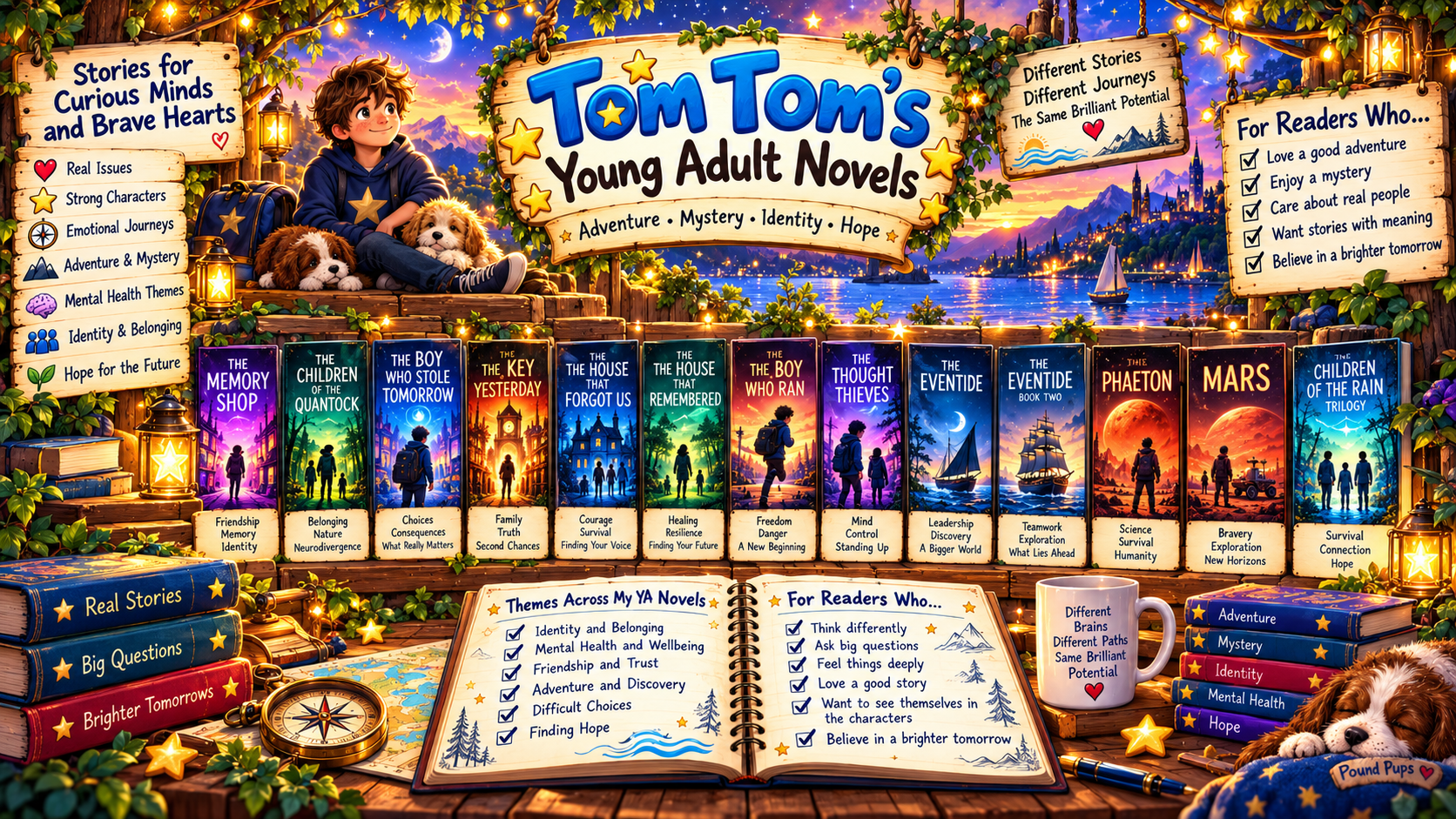
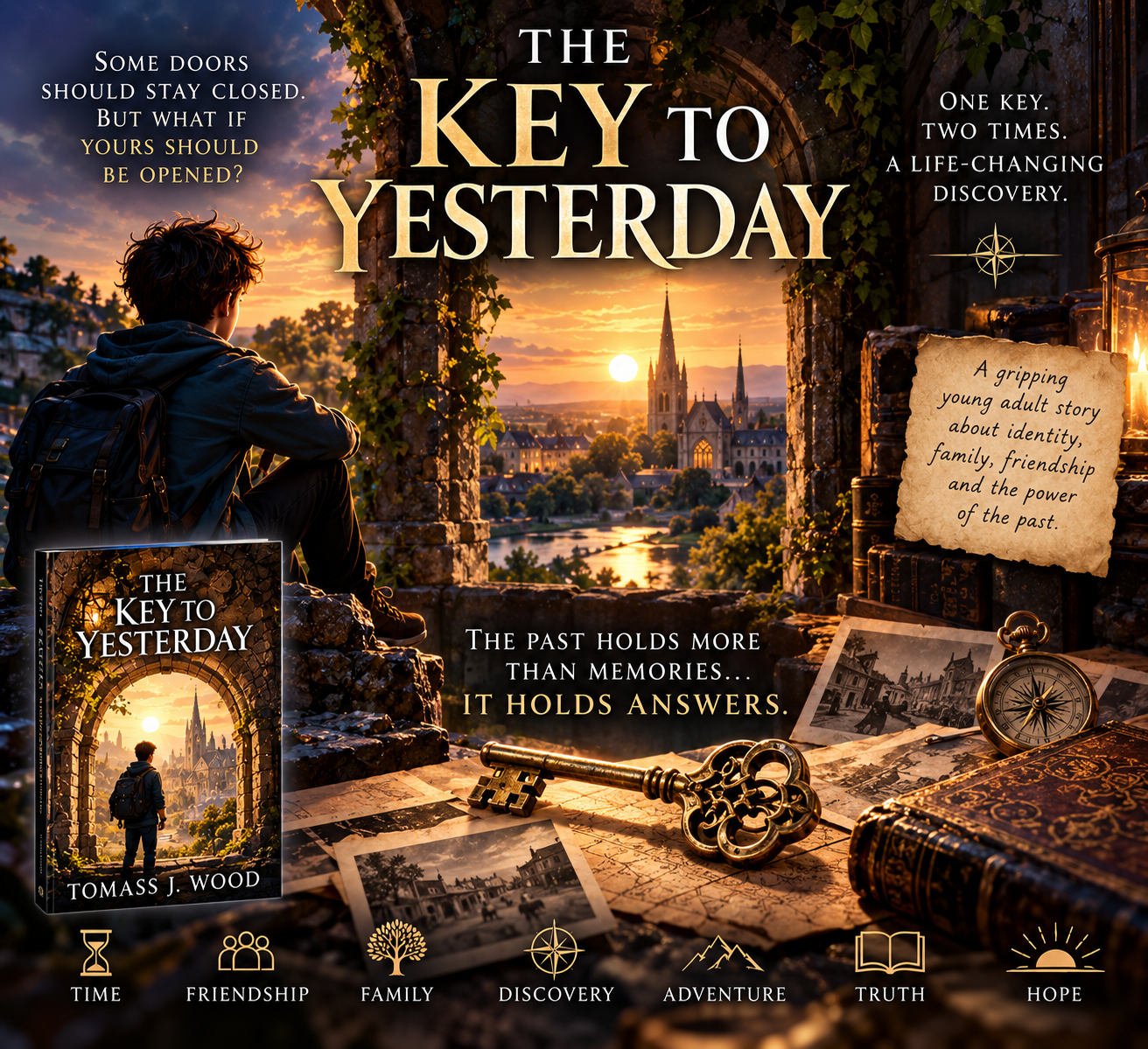
Titles such as The memory shop, The key to yesterday, and The boy who stole tomorrow dive deeply into the complex weight of our pasts. Through poignant, speculative narratives, these books explore grief, hidden emotional wounds, and the hard-won courage required to reclaim tomorrow. They remind readers that while our beginnings shape us, our choices guide our next steps.
Unravelling memories and navigating yesterday

Secrets of place, family, and home
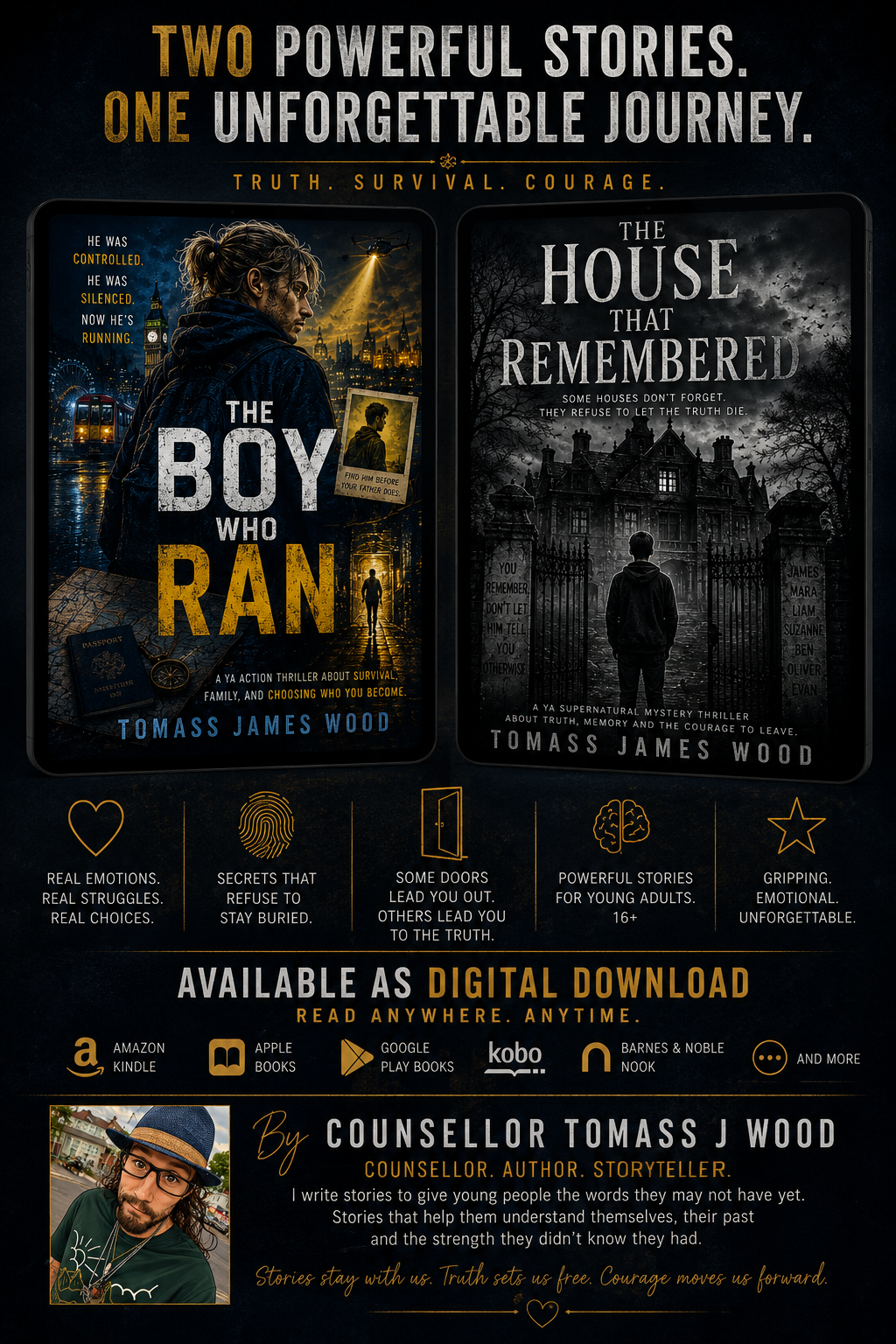
In The children of the Quantock, The house that forgot us, and its companion The house that remembered, the landscape itself mirrors the trials of family conflict and identity. These novels weave atmospheric mystery with heartfelt explorations of neurodiversity and belonging, showing how shared bonds and understanding can heal long-fractured relationships.
Epic journeys and the strength within
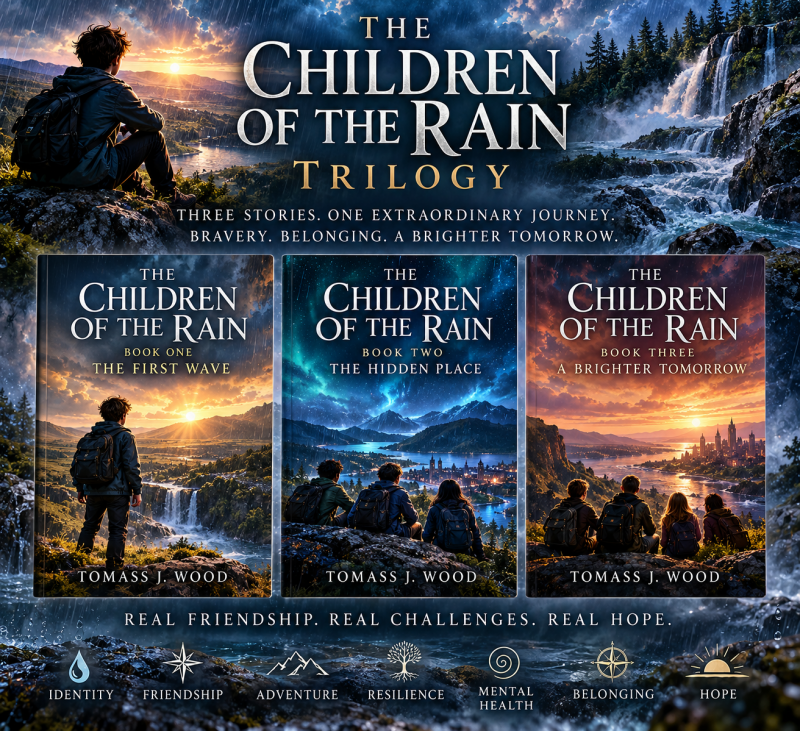
From the tension of The boy who ran and The thought thieves to the sweeping worlds of The eventide series, Phaeton / Mars, and the Children of the rain trilogy, these stories capture the endurance of the human spirit. Crafted for thoughtful reading at home or vital discussion in classrooms, each book illuminates the truth that being different is a profound strength.
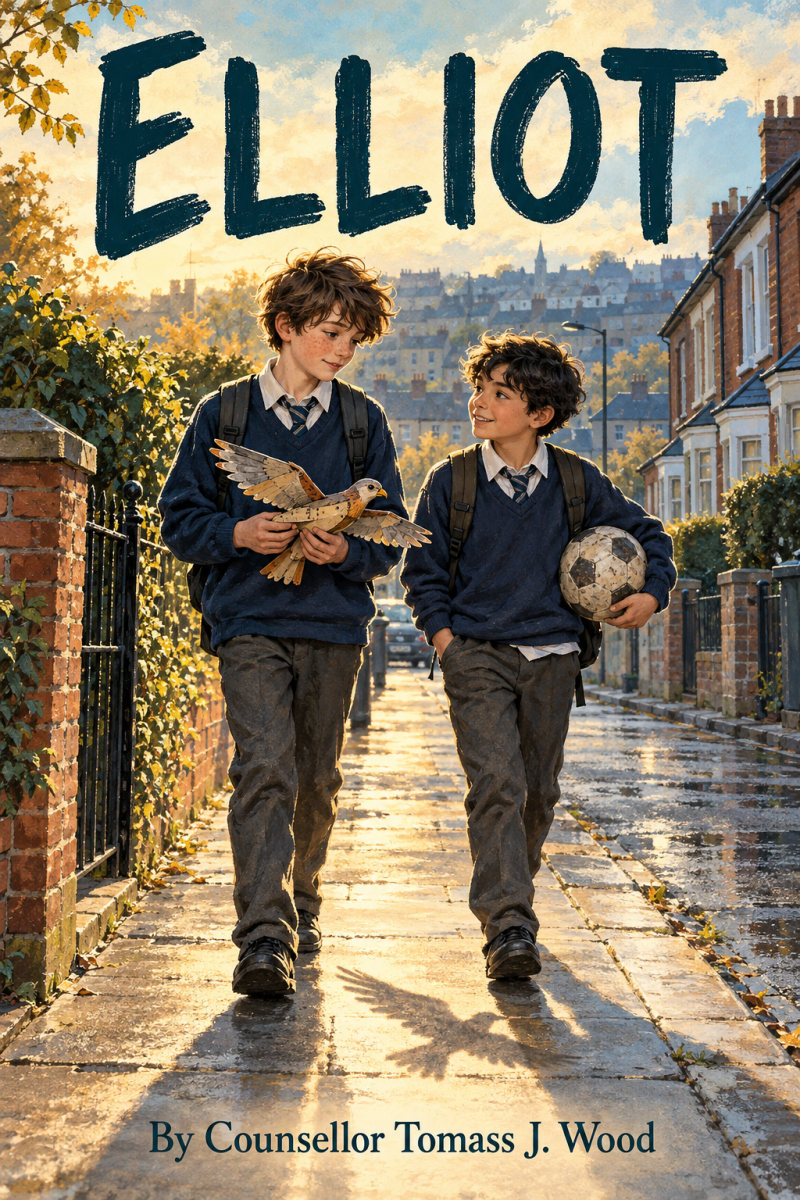
ELLIOT
By Counsellor Tomass J. Wood
Eleven-year-old Elliot starts a new school halfway through the year with a reputation he cannot escape. Expelled from his previous school for disruptive behaviour, he is used to adults calling him rude, difficult and unwilling to learn. Few look beyond his outbursts to understand the overwhelm, confusion and fear of rejection he experiences as an autistic child with ADHD.
Orphaned at birth, Elliot lives with foster parents whose financial difficulties form the backdrop to an increasingly frightening home life. He is frequently shouted at and hit, and has begun believing that everything would be better if he could simply stop getting things wrong.
Then he meets Luca, a younger boy who lives nearby. Their friendship grows through break-time conversations, silly games and walks home. Luca enjoys Elliot’s humour and his handmade cardboard birds. With him, Elliot begins to feel wanted.
But Luca has troubles of his own. At home, his controlling father makes him and his two brothers and two sisters spend hours cleaning, enforcing shifting standards through shouting and intimidation. Luca watches the time constantly, knowing that being late can bring consequences for everyone.
While messing about on their walk home, Elliot catches his arm on a broken fence. Luca helps him find an adult, and the injury is treated. When Elliot returns home, however, his foster parents focus on his torn sleeve and the inconvenience he has caused. Frightened and hurting, he receives blame instead of reassurance.
The incident prompts a teacher to look more closely at Elliot’s fear of making mistakes. As the boys gradually share their experiences, they begin recognising that what happens at home is more than ordinary discipline. Both are afraid to speak: Elliot fears losing another home, while Luca worries that his siblings will be separated.
Elliot’s first disclosures emerge awkwardly, through jokes and anger. A teacher keeps listening. Eventually, a short written note helps him explain that he is frightened to go home. Luca also confides in a trusted adult, and the children’s accounts lead to action involving the school and the professionals responsible for their safety.
Elliot moves to a different foster placement nearby, while Luca and his siblings find safety with their mother away from their father. The changes take time, and neither boy immediately stops feeling afraid. Their friendship continues as they learn to trust more predictable, caring responses from adults.
The novel ends with an unhurried walk home. When Elliot accidentally tears his sleeve, he expects anger—but receives concern. He remains the same lively, funny boy, with difficult days still ahead. What has changed is that he no longer has to earn kindness by being easy to look after.
ALEX
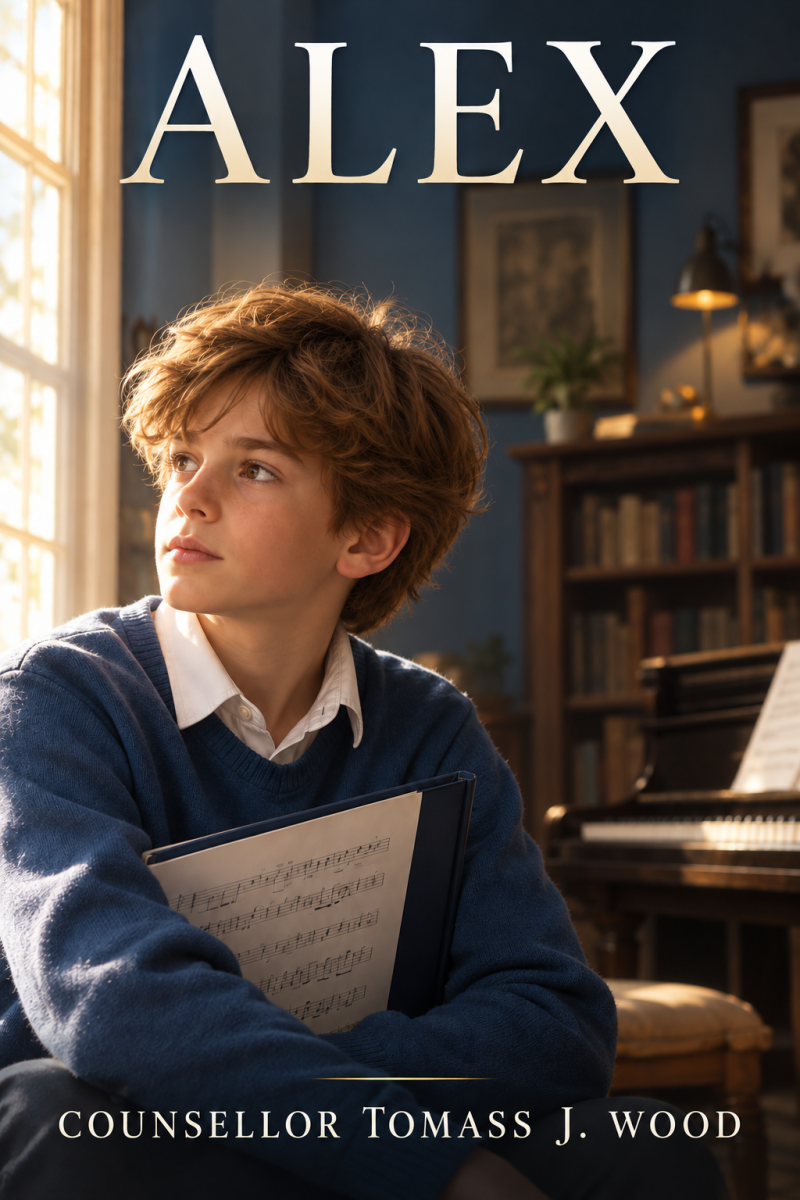
by Counsellor Tomass J. Wood
Sometimes the child everyone calls difficult is the child nobody has truly listened to.
Alex is twelve years old, misunderstood by the world around him and struggling to find somewhere he truly belongs.
Living with ADHD, repeated school difficulties, rejection and an unpredictable home life, Alex has learnt that being quiet can sometimes feel safer than being noticed. Behind his behaviour lies a sensitive, intelligent boy desperate to be understood, accepted and loved.
Music becomes his escape. Through the piano and marching bands, Alex discovers something extraordinary — a place where he can express feelings he cannot always put into words.
But behind closed doors, Alex carries experiences no child should have to face. As friendships develop and trusted adults begin to see beyond his behaviour, he slowly discovers that his voice matters and that his past does not have to determine his future.
Alex is an emotional, thought-provoking coming-of-age novel exploring neurodivergence, childhood trauma, family relationships, friendship, courage and the difficult journey towards healing.
It challenges readers to look beyond labels and behaviour, asking one important question:
What if the child everyone thinks is the problem is actually the child who needs someone to listen?
A story of survival, self-discovery and hope, reminding young people that their experiences do not define their worth and that being understood can change everything.
Content guidance: Intended for mature young adult readers. Contains themes of domestic abuse, child abuse, emotional trauma and safeguarding, explored sensitively and without graphic descriptions.
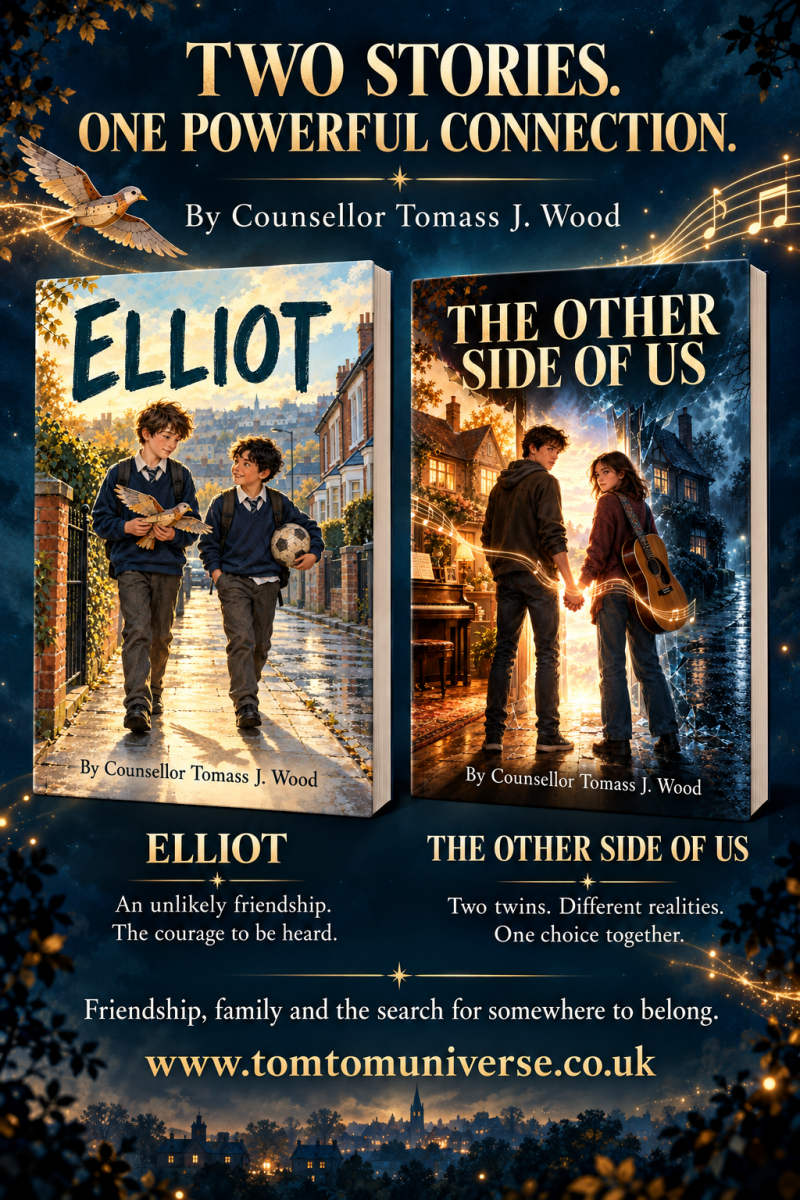
THE OTHER SIDE OF US
By Counsellor Tomass J. Wood
Fifteen-year-old twins Charlie and Sasha have always had each other. Raised by their loving nan and grandad in Ringwood after their parents died on the night they were born, they share everything—from unfinished sentences to the music they create together. Their childhood is happy, yet both long to know the mum and dad missing from their lives.
One night, Charlie wishes things could be different.
The next morning, his parents are alive—but the home he wakes in is frighteningly unfamiliar. His father is angry and violent, his mother drinks to escape her grief, and Sasha can barely stand to look at him. In this reality, Nan and Grandad died instead.
Charlie discovers that the two childhoods began with a single decision: who would drive Mum to hospital. In one life, Dad took the keys. In the other, he handed them to Grandad. That small exchange changed who survived and everything that followed.
Desperate to reach Sasha, Charlie revives their childhood guessing game. Colours become numbers, then images, until both realise they can hear thoughts the other has never spoken. Through their music, the connection grows strong enough to reveal memories—and open passages between realities.
As Charlie earns Sasha’s trust, he learns why she resents the brother she has grown up with. Sasha, meanwhile, begins experiencing the safe, loving childhood Charlie remembers. Together, they seek help for the dangers in their present home while investigating the choices that divided their lives.
Then they discover a third possibility. An ambulance was already coming on the night they were born. Somewhere, Dad agreed to wait. Nobody entered the car, and their parents and grandparents all survived.
But reaching that life requires a choice neither twin can make alone. Charlie fears that leaving means betraying the people he loves. Sasha fears trusting another version of the father who hurt her. Their connection falters whenever either feels pressured or wants something different.
By exploring the third reality, they discover an imperfect but caring family, where arguments can end without fear. They also learn that choosing it will leave the other lives intact.
At last, Charlie and Sasha freely choose the same future. They settle into the reality where their family waited for help, carrying their memories with them. Surrounded by Mum, Dad, Nan and Grandad, they return to their music—together by choice, with a deeper understanding of what makes a home.
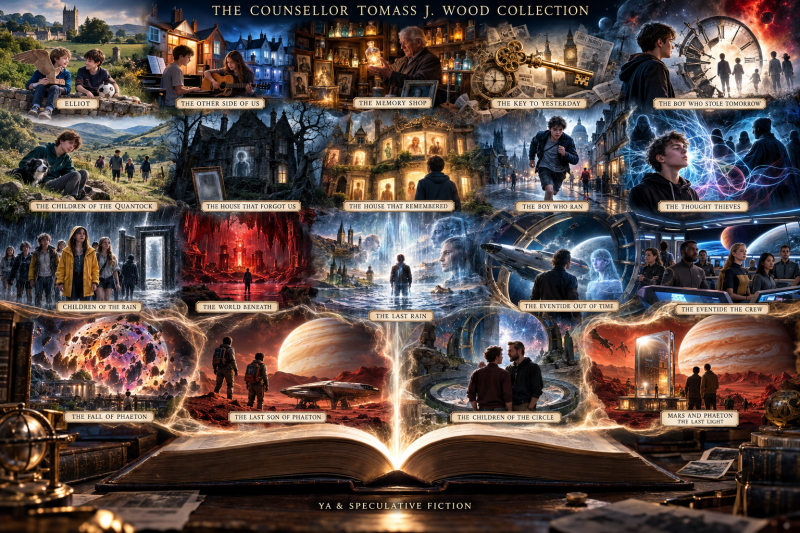
📚 DISCOVER MY YA AND SPECULATIVE FICTION
By Counsellor Tomass J. Wood
My stories explore difficult childhoods, friendship, neurodivergence, grief and belonging—sometimes through ordinary life, sometimes through worlds where memories can be stolen and one decision can change reality.
Here’s a look at my collection:
📖 ELLIOT
Two boys become friends while hiding difficult home lives. Together, they begin discovering that being misunderstood does not mean being undeserving of kindness, safety or help.
📖 THE OTHER SIDE OF US
Charlie wakes in a reality where his parents survived—but the loving childhood he remembers has disappeared. He and his twin sister must reconnect before they can choose their future together.
📖 THE MEMORY SHOP
A shop where memories can be removed and transferred draws Jack into a mystery about identity, loss and the cost of taking pain away.
📖 THE KEY TO YESTERDAY
A mysterious key connected to Ben’s grandfather opens the possibility of changing the past. But rewriting what hurts may change far more than he intended.
📖 THE BOY WHO STOLE TOMORROW
Callum begins predicting events, then discovers children disappearing from records and memories. Someone is taking their futures.
📖 THE CHILDREN OF THE QUANTOCK
Set around the Quantock Hills, Si’s story explores growing up autistic, being misunderstood and searching for friendship and belonging.
📖 THE HOUSE THAT FORGOT US
Milo’s new home hides an erased child and a room connected to stolen memories. Uncovering its secrets could cost him his own existence.
📖 THE HOUSE THAT REMEMBERED
For Evan, a house that preserves memories becomes inseparable from his experiences of bullying, control and the struggle to reclaim his identity.
📖 THE BOY WHO RAN
An unsafe home, a missing brother and a dangerous criminal world draw Rowan into a struggle for survival—and the chance to choose who he becomes.
📖 THE THOUGHT THIEVES
Len uncovers a system capable of controlling thoughts. Fighting back reveals a threat far larger than he first imagined.
🌧️ THE CHILDREN OF THE RAIN TRILOGY
• Children of the Rain — Black rain, missing children and extraordinary powers open a boundary between worlds.
• The World Beneath — Jacky enters a deeper mystery involving red rain, hidden experiments and his own origins.
• The Last Rain — As realities face a final storm, memory, sacrifice and belonging become the heart of the struggle.
🚀 THE EVENTIDE
• Out of Time — Captain Elliot J. Sharp and his AI companion face a ship caught between seconds and worlds.
• The Crew — A crew remembers years with their captain that he cannot recall. Which version of his life can he trust?
🪐 THE PHAETON TRILOGY
• The Fall of Phaeton — El’s family and world become caught in planetary conflict, buried history and the danger of an ancient weapon.
• The Last Son of Phaeton — A faster-than-light experiment connects Jay, Phaeton’s last survivor and a dying Mars to humanity’s distant past.
• The Children of the Circle — El and Jay uncover an ancient intelligence that tests their relationship, their choices and the future of the Circle.
✨ MARS & PHAETON: THE LAST LIGHT
Ren and his companions uncover the legacy of a destroyed civilisation. Humanity must decide whether its greatest technological ambition could repeat an ancient catastrophe.
Across these stories, I keep returning to the child or young person beneath the behaviour—the person who needs understanding, a voice and the possibility of a different ending.
Which story would you pick up first? 💬
A Note from the Author
My stories often begin with a feeling I remember: being misunderstood, wanting to belong, wishing somebody would listen, or wondering whether life could have turned out differently.
Much of my writing draws on my childhood and the challenges I have lived through. Some stories stay close to everyday life. Others travel through stolen memories, alternative realities, mysterious houses and distant worlds. Their emotional foundations remain personal, even when the adventures are impossible.
As a neurodivergent author, I understand how difficult it can be to explain what is happening inside when people are focused on what they see outside. Through my characters, I explore the fear beneath anger, the loneliness behind withdrawal and the need for connection that can be difficult to put into words.
I also make room for laughter, curiosity, friendship and ordinary moments of kindness. A difficult childhood contains more than its hardest experiences, and a character deserves more than a story about their pain.
Sometimes I write the understanding I needed when I was younger. Sometimes I imagine a different ending. My hope is that readers will find something recognisable in these pages—and perhaps discover a new way of understanding themselves or someone they love.
Thank you for spending time in these worlds and getting to know the people within them.
Counsellor Tomass J. Wood
Explore my work: www.tomtomuniverse.co.uk
#CounsellorTomassJWood #YoungAdultBooks #SpeculativeFiction #NeurodivergentAuthor #TomTomUnivers
Do You Like to Write?
Do you have stories, characters or adventures waiting in your imagination? Perhaps you already know exactly what happens—or maybe you have a few ideas and aren’t sure where to begin. Both are brilliant places to start.
The Tom Tom’s Young Writers Workbook is a free download to help you explore your ideas and build them into a story. It gives you space to make notes about what your story might be about, where it could happen, why it matters and who might be involved. You can answer the questions in any order, draw pictures, jot down single words or let one idea lead you to another.
There are no right or wrong answers, and you don’t have to plan everything before you begin. Your story can grow one thought at a time. You might write about something you know, imagine a brand-new world or mix real experiences with a little magic.
Download the workbook below and start discovering where your ideas can take you. You are the writer—and your story can begin anywhere.